
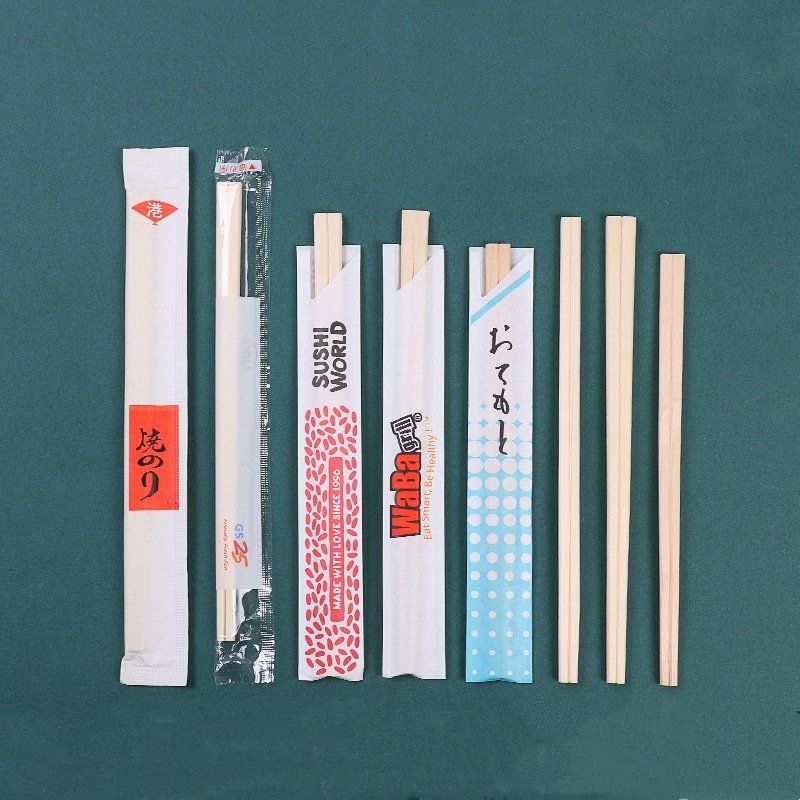
Disposable Wooden Chopsticks Manufacturer vs Trading Company: Which Should You Choose?
When sourcing disposable wooden chopsticks from China, one of the biggest decisions importers face is whether to buy directly from a disposable wooden chopsticks manufacturer or work through a trading company.
At first glance, both suppliers may appear to offer similar products. They often have professional websites, competitive prices, and export experience. However, behind the quotation, there are significant differences in pricing, production capability, quality control, customization, delivery time, and long-term supply stability.
For restaurants, wholesalers, supermarket chains, food distributors, and importers, choosing the right supplier can directly impact purchasing costs, customer satisfaction, and business profitability.
In this guide, we’ll explain the differences between manufacturers and trading companies, helping you make a smarter sourcing decision.
What Is a Disposable Wooden Chopsticks Manufacturer?
A disposable wooden chopsticks manufacturer owns and operates its own production facilities.
Instead of purchasing products from other factories, manufacturers control every stage of production, including:
- Raw material purchasing
- Wood grading
- Cutting and polishing
- Drying
- UV sterilization
- Packaging
- Quality inspection
- Container loading
Because the entire production process is completed in-house, manufacturers usually offer better quality consistency, lower prices, and greater customization flexibility.
At Dalian Weimei Houseware Co., Ltd., we have specialized in manufacturing disposable wooden chopsticks for more than 25 years, operating 25 automated production lines with an annual capacity of over 600 million pairs.
What Is a Trading Company?
A trading company does not manufacture products itself.
Instead, it purchases disposable wooden chopsticks from different factories and resells them to overseas buyers.
Some trading companies cooperate with several factories, allowing them to offer a wider product range.
Their primary responsibilities include:
- Supplier sourcing
- Price negotiation
- Export documentation
- Customer communication
- Shipping coordination
Although trading companies provide convenience, buyers often pay additional markups because the products pass through an extra intermediary.
Manufacturer vs Trading Company: Side-by-Side Comparison
| Comparison | Manufacturer | Trading Company |
| Factory Direct Pricing | ✅ Yes | ❌ Additional markup |
| Own Production Lines | ✅ Yes | ❌ No |
| Quality Control | Full control | Depends on factory |
| OEM & Private Label | Highly flexible | Limited |
| Technical Support | Direct engineers | Indirect communication |
| Delivery Schedule | More reliable | Depends on suppliers |
| Product Development | Faster | Slower |
| Export Experience | Usually extensive | Varies |
For buyers planning long-term cooperation, manufacturers generally provide greater advantages.
1.Price Difference
Price is often the first concern for importers.
Because manufacturers eliminate the middleman, they can usually provide lower factory-direct pricing.
Trading companies typically add service fees or profit margins to the factory price.
For large-volume orders, even a small difference in unit price can result in substantial annual savings.
For example:
- A difference of only US$0.0005 per pair
- On a 40HQ container (approximately 4.03 million pairs)
- Can save more than US$2,000 per 40HQ container.
Be Cautious If a Trading Company Offers a Lower Price Than the Factory
If the quality specifications are exactly the same, but a trading company offers a price that is lower than the factory’s direct quotation, buyers should take a closer look.
In many cases, the lower price may be achieved by mixing lower-grade raw materials with higher-grade ones, rather than by improving production efficiency. Since the cost difference between Grade A, Grade B, and Grade C wooden chopsticks can be significant, even a small percentage of lower-grade materials can noticeably reduce the overall production cost.
Having manufactured products for trading companies using their own supplied materials in the past, we have firsthand experience with how this practice works. We understand that some traders may purchase lower-quality raw materials and blend them with higher-grade materials to reduce costs while still selling the products as premium quality.
Of course, not every trading company operates this way, and many reputable trading companies maintain strict quality standards. However, when a quotation appears unusually low compared with multiple factory offers, buyers should always verify:
- The raw material grade (Grade A, Grade B, or Grade C)
- Surface finishing and polishing quality
- Quality inspection standards
- Production consistency
A reliable supplier should be able to explain exactly why their price is lower, rather than simply offering the cheapest quotation.
For professional importers, the lowest price is rarely the lowest total cost. Consistent quality, transparent manufacturing processes, and stable long-term supply are often far more valuable than saving a fraction of a cent per pair.
2.Trade Mode Can Also Affect Pricing
Besides packaging and product quality, trade mode is another major factor affecting disposable wooden chopsticks pricing.
For disposable wooden chopsticks exported from China, there is no export tax rebate under the standard export model.
Professional manufacturers can instead use Processing Trade (also known as Processing with Supplied Materials), which helps reduce tax-related costs during production.
This trade mode can lower manufacturing costs by approximately 13–18%, creating a significant pricing advantage for international buyers.
Because Processing Trade requires factory production management, customs supervision, and government-approved manufacturing qualifications, only qualified manufacturers can operate under this trade mode.
Trading companies generally cannot use Processing Trade by their own name because they do not own production facilities. But trading company can use factory offshore account to do processing trade.
For high-volume importers, this difference alone may generate considerable annual purchasing savings.
How does Processing Trade works?
For disposable wooden chopsticks, processing trade is one of the most important factors affecting the final export price.
Under this trade model, the factory or overseas buyer imports raw materials into China under a registered processing trade program. The imported materials are officially declared to Chinese Customs as being used exclusively for manufacturing products that will be exported.
Because these materials are imported solely for export production, Chinese Customs does not charge Value-Added Tax (VAT) on the imported raw materials. After production is completed, the finished products are exported directly to the overseas customer.
To comply with the processing trade regulations, payment for the exported goods is typically made to the factory’s Hong Kong (offshore) bank account rather than its domestic RMB account. This structure allows the transaction to meet the customs requirements for processing trade and avoids unnecessary VAT costs.
This trade model is particularly suitable for products that do not qualify for China’s export VAT rebate, such as disposable wooden chopsticks.
As a result, processing trade can usually reduce overall production costs by approximately 13%–18%, creating a significant price advantage for international buyers.
One important point is that processing trade can only be handled by qualified manufacturing factories that hold the necessary customs registration and processing trade licenses. Most trading companies cannot legally operate under this trade model because they do not have the required manufacturing facilities or customs qualifications.
For buyers sourcing large quantities of disposable wooden chopsticks, working directly with a qualified factory that offers processing trade can significantly reduce procurement costs while ensuring full compliance with Chinese customs regulations.
At Dalian Weimei Houseware Co., Ltd., we have extensive experience in processing trade operations and can help international buyers reduce procurement costs through compliant customs procedures and optimized export solutions.
Can Trading Companies Also Use Processing Trade?
The answer is yes—but only under specific circumstances.
Some experienced trading companies work closely with qualified manufacturing partners that are authorized to operate under China’s processing trade program. In these cases, the factory handles the customs registration, manufacturing process, and export compliance, while the overseas buyer communicates primarily with the trading company.
To comply with processing trade regulations, payment for the exported goods is typically made to the manufacturer’s Hong Kong (offshore) bank account, allowing the processing trade transaction to be completed in accordance with Chinese customs requirements.
However, this type of cooperation requires a high level of trust and a long-term partnership between the trading company and the factory. The manufacturer must also respect the commercial relationship and avoid contacting the trading company’s customers directly.
As a result, determining whether your supplier is a genuine manufacturer or simply a trading company becomes an important part of the sourcing process. Experienced international buyers often evaluate factors such as factory ownership, production capacity, export qualifications, customs registration, and technical expertise before making a purchasing decision.
For large-volume buyers, understanding the difference between a factory and a trading company can have a significant impact on pricing, production flexibility, and long-term supply chain stability.
At Dalian Weimei Houseware Co., Ltd., we are a direct manufacturer with our own production facilities and qualified processing trade capabilities, enabling us to provide competitive factory pricing and compliant export solutions for international buyers.
3. Better Quality Control
Quality consistency is critical for restaurant chains and distributors.
Manufacturers inspect products throughout production instead of only checking finished goods.
At Dalian Weimei, quality control includes:
- Raw wood inspection
- Moisture content testing
- Surface polishing inspection
- Splinter detection
- Packaging inspection
- Carton verification before shipment
This systematic process minimizes defects and ensures stable product quality.
Trading companies often rely entirely on factory inspections and may have limited visibility into the production process.
4. More Customization Options
Customization is another major advantage of working directly with manufacturers.
A professional disposable wooden chopsticks factory can customize:
- Chopstick length
- Wood species
- Surface finish
- Logo printing
- Paper sleeve design
- Paper weight (35g, 55g, 85g, 105g, 118g, 128g, 157g)
- Carton artwork
- Retail packaging
- Barcode labels
- Shipping marks
Manufacturers can also recommend the most cost-effective packaging solution based on your target market.
5. Faster Communication
When problems arise, direct communication saves valuable time.
With a manufacturer, buyers communicate directly with:
- Sales managers
- Production planners
- Engineers
- Quality inspectors
Technical questions can often be answered within hours.
When you partner with a factory, you’re not just communicating with one person—you’re working with an entire team dedicated to supporting your business.
When working with trading companies, communication usually passes through several parties, increasing response time and the risk of misunderstandings.
6. More Stable Lead Times
Delivery delays can seriously affect restaurant supply chains.
Manufacturers control:
- Production scheduling
- Raw material inventory
- Packaging production
- Shipping arrangements
This allows them to provide more accurate lead times.
Trading companies depend on external factories, making delivery schedules less predictable.
7. Greater Cost Transparency
Factory quotations are usually easier to understand because buyers can clearly see how pricing is affected by:
- Wood species
- Product grade
- Packaging style
- Printing requirements
- MOQ
- Container quantity
Trading companies may bundle these costs together, making it difficult for buyers to identify where additional charges are added.
8. Better Technical Knowledge
Manufacturers understand the products they produce.
For example, they can explain:
- Why moisture content should remain below 10%
- The difference between Grade A, Grade B, and Grade C wooden chopsticks
- Which paper sleeve is suitable for takeaway restaurants
- How packaging affects shipping costs
- Which wood species fits different markets
This technical expertise helps buyers make informed purchasing decisions.
When Does a Trading Company Make Sense?
Although manufacturers offer many advantages, trading companies may still be suitable in certain situations.
For example:
- You need dozens of different disposable products from multiple factories.
- Your purchasing volume is too small to meet factory MOQs.
- You prefer a single supplier to consolidate products from different manufacturers.
In these cases, a trading company may simplify procurement.
However, for buyers focusing primarily on disposable wooden chopsticks, purchasing directly from a manufacturer usually delivers better value.
Why Choose Dalian Weimei Houseware Co., Ltd.?
As a professional disposable wooden chopsticks manufacturer, Dalian Weimei has been serving customers worldwide for over 25 years.
We provide:
- Factory-direct pricing
- Annual capacity of 600 million pairs
- 25 automated production lines
- FSC®, FDA, LFGB, and BRC-compliant production
- OEM & Private Label services
- Custom paper sleeves from 35g to 157g
- Flexible MOQs
- Fast quotations within 24 hours
- Professional export documentation
- Worldwide shipping support
Whether you need standard disposable wooden chopsticks or premium private-label products, our experienced team can help you build a stable, cost-effective supply chain.
Frequently Asked Questions
Is buying directly from a wooden chopsticks manufacturer cheaper?
In most cases, yes. Manufacturers eliminate intermediary markups and can often provide more competitive factory-direct pricing, especially for bulk orders.
Can trading companies guarantee product quality?
Some reputable trading companies have strong quality control systems. However, manufacturers have direct oversight of production, allowing them to identify and resolve quality issues more efficiently.
Which supplier is better for custom logo printing?
Manufacturers are generally the better choice because they manage printing, packaging, and production in-house, providing greater flexibility and faster adjustments.
Do manufacturers have higher MOQs?
Not always. Many professional factories, including Dalian Weimei, offer flexible MOQs depending on the product type and packaging requirements.
Should I choose a manufacturer or a trading company?
If disposable wooden chopsticks are one of your core products and you require consistent quality, competitive pricing, and long-term supply stability, working directly with a manufacturer is typically the better option.
Ready to Work with a Professional Wooden Chopsticks Manufacturer?
Choosing the right supplier is one of the most important decisions for any importer. A reliable manufacturer can help reduce purchasing costs, improve product consistency, shorten lead times, and strengthen your brand in a competitive market.
At Dalian Weimei Houseware Co., Ltd., we combine over 25 years of manufacturing experience, 25 automated production lines, and an annual capacity of 600 million pairs to deliver dependable, factory-direct solutions for customers around the world.
Whether you are sourcing disposable wooden chopsticks in bulk, launching a private label, or looking for a long-term manufacturing partner, our team is ready to support your business.
Contact us today to receive:
- Factory-direct quotation within 24 hours
- Free product samples
- Custom OEM & private label consultation
- Packaging recommendations
- Container loading optimization
- Professional export and logistics support
Partner with Dalian Weimei Houseware Co., Ltd. and build a stronger supply chain with a trusted disposable wooden chopsticks manufacturer.
