
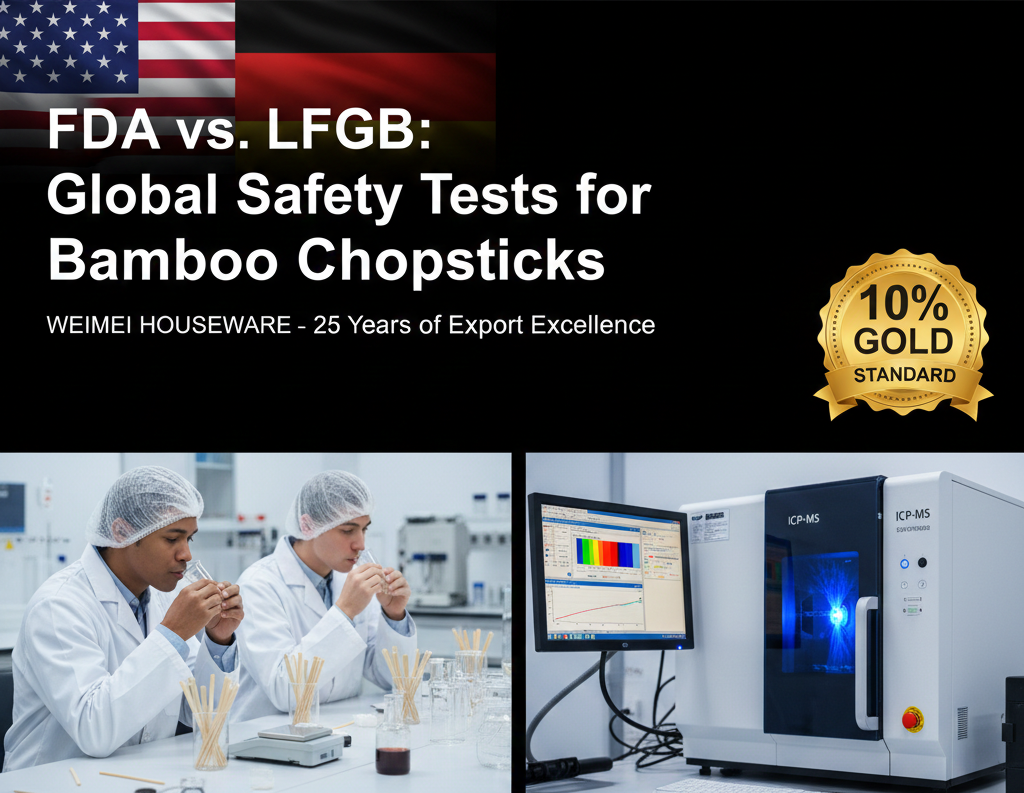
In the global trade of disposable tableware, the FDA (Food and Drug Administration) and German/EU LFGB (Lebensmittel-, Bedarfsgegenstände- und Futtermittelgesetzbuch) are the most authoritative safety standards for food contact materials.
As professional importers, understanding these tests is not just about legal compliance,but also about protecting your brand. This article offers an in-depth exploration of the test methodologies, chemical parameters, and technical distinctions between FDA and LFGB standards as they apply to bamboo chopsticks. It aims to clarify the specific requirements, testing procedures, and key differences that manufacturers and importers need to consider when ensuring compliance with these international regulations.
1.Basic Concepts
It is crucial to understand the difference between these two test standards before diving into the lab metrics.
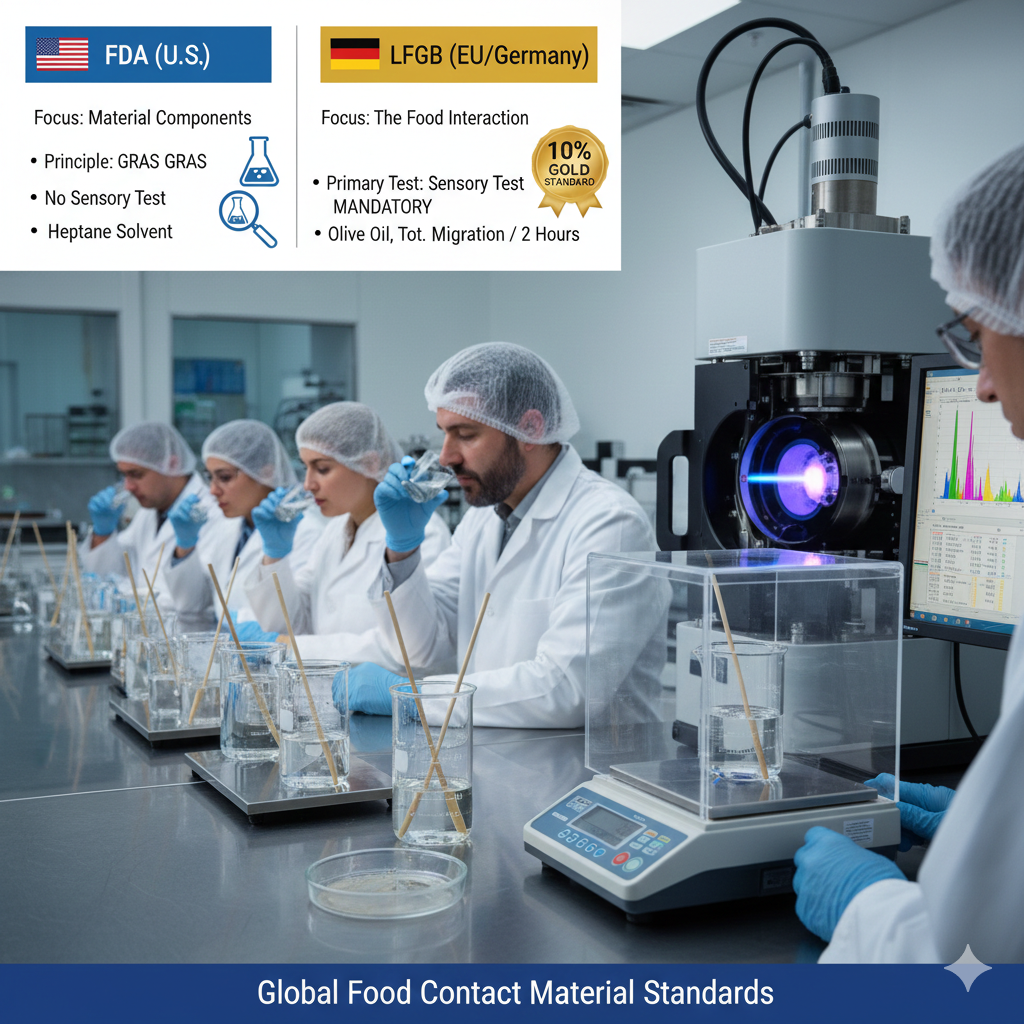
U.S. FDA (21 CFR Parts 170-189): The American system primarily focuses on the safety of specific material components and additives. It operates under the GRAS (Generally Recognized as Safe) principle, ensuring that materials do not contain any prohibited substances that could migrate into food.
German LFGB (Sections 30 & 31): Considered one of the highest food safety standards, the LFGB is generally more stringent than the FDA. It emphasizes the Total Migration Limit (TML) and Sensory Analysis. While a product may pass FDA standards, it can still fail LFGB testing if it alters the smell or taste of food, even slightly.
2. Sensory Analysis: The “Smell and Taste” Test
Although the FDA has ordinary requirements for cleanliness, the Sensory Test (DIN 10955) of LFGB is a rigorous, human-centered test that many factories fail to pass.
Test method
Tools: Distilled water or the real food intended to use.
Process:Soak bamboo chopsticks in water,heat to 70°C and keep for 2 hours (simulating contact with hot food).
Evaluation: A team of six trained sensory experts tasted the water and smelled the chopsticks.
Rating: They use a rating scale of 0 to 4.
- 0 points: No significant difference.
- 4 points: Significant difference exists.
Acceptance standard:A score below 2.5 is typically required to meet the LFGB standard.
Experts advise: Our 10% moisture content standard is crucial here. High moisture content in bamboo may breed bacteria or emit a natural odor, leading to failure in LFGB sensory tests.
3.Overall Migration Limits (OML) and Specific Migration (SML)
The most technical part of the test is simulating the interaction between bamboo products and different types of food.
LFGB Migration Testing (EN 1186)
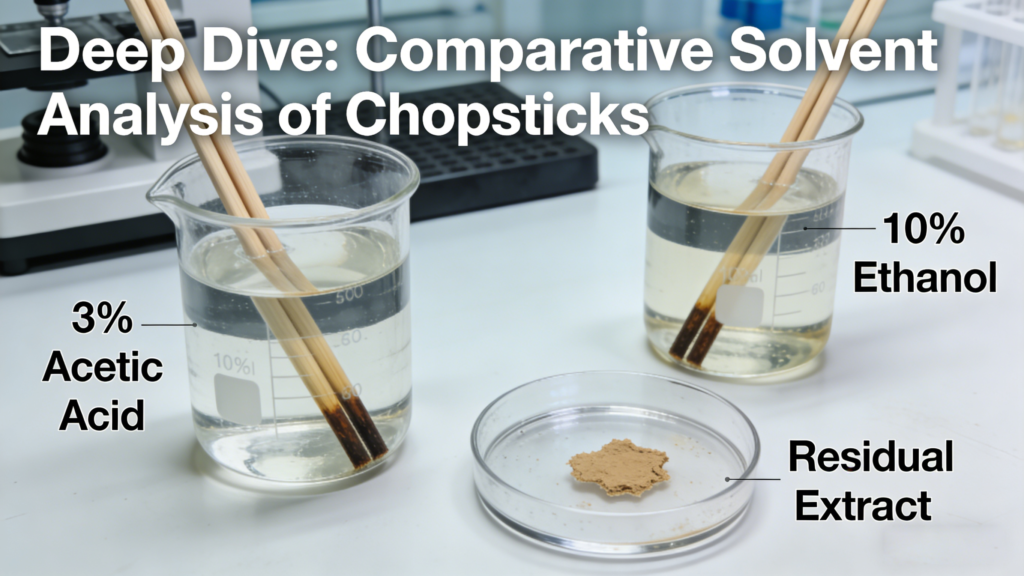
LFGB need to test with different “Food Simulants” to meet various dining scenarios:
- 3% Acetic Acid: Simulates acidic foods (e.g., vinegar-based sauces).
- 10% Ethanol: Simulates alcoholic beverages or water-based foods.
- 95% Ethanol or Olive Oil: Simulates fats and oily foods.
- Test method:Tests are typically conducted at 70°C for 2 hours.
Total Migration Limit (OML): The total amount of substances migrating from bamboo products into food must not exceed 10 mg/dm² or 60 mg/kg.
4.FDA Extraction Testing (21 CFR 176.170)
The U.S. Food and Drug Administration (FDA) uses an “extractives” test, not a “migration” test.
- Solvents: Distilled water, n-heptane (for fatty foods), and 8% ethanol.
- Test method: Weigh the residue after evaporation.
- Limits are typically 0.5 mg/in².
5. Chemical Markers and Prohibited Substances
FDA and LFGB both test bamboo chopsticks to check for harmful chemical residues used in their growth or processing.
A.Pentachlorophenol (PCP) and Preservatives
- As bamboo is easy to mold,leading to low-quality factories to use PCP
- Test method:Gas Chromatography with Electron Capture Detection (GC-ECD).
- Limit:LFGB is extremely strict, often requiring less than 0.05 mg/kg. FDA monitors this as part of its general safety requirements for wood-based products.
B. Formaldehyde release
If the bamboo is treated or if resins are used (common in compressed bamboo), formaldehyde is a major risk.
- Test Method: The Photometric Method (using Acetylacetone).
- LFGB Limit: Must not over 15 mg/kg.
C. Sulfur Dioxide (SO2) – Bleaching Agents
To make the chopstick more whiteness and clean, the Sulfur will be used by low quality chopsticks factory when produce the chopsticks.
- Test Method:Monier-Williams Method (distillation and titration).
- Requirement:High concentrations of sulfur dioxide are prohibited because they can trigger allergic reactions.
6. Heavy Metals Analysis
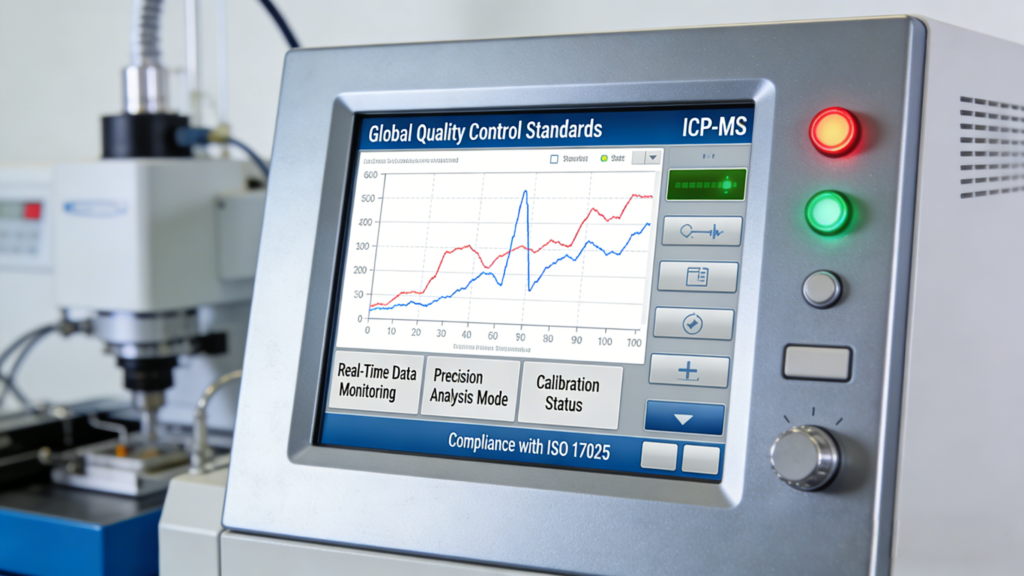
The bamboo can absorbed the heavy metals from the soil or contaminated water. Both LFGB and FDA will use ICP-MS (Inductively Coupled Plasma Mass Spectrometry) for detection.
| Heavy Metal | LFGB / EU Limit (mg/kg) | FDA General Guidance |
| Lead (Pb) | < 0.01 | Strictly Monitored |
| Cadmium (Cd) | < 0.002 | Prohibited |
| Mercury (Hg) | < 0.01 | Prohibited |
| Arsenic (As) | < 0.01 | Strictly Monitored |
7. Tools and Laboratory Requirements
A reliable test reports issued by SGS, TUV, or Intertek must specify the equipment used. If you are reviewing a factory’s report, please note the following equipment:
- Analytical balance: Accurate to 0.1 mg, used to measure migrating residues.
- Constant temperature oven: Capable of maintaining a temperature of 70°C within an error range of ±1°C, used to simulate the migration process.
- ICP-OES / ICP-MS: Used for trace heavy metal analysis.
- Spectrophotometer: Used to measure color migration and formaldehyde content.
8. Which One Should You Choose?
| Feature | FDA (USA) | LFGB (Germany/EU) |
| Cost of Testing | Moderate | High |
| Sensory Test | Not Required | Mandatory |
| Fatty Food Simulant | n-Heptane | 95% Ethanol / Olive Oil |
| Global Reputation | Standard | Premium / Elite |
| Complexity | Components-based | Interaction-based |
9. Why Weimei Houseware Passes Both Easily
With over 25 years of export experience, we have mastered the technology of Chemical-Free Compliance. Our strategy involves:
- 1.Raw material selection:we only use 3-5 years’ bamboo which has perfect density. Young bamboo (under 2 years) has high sap content, which often fail in LFGB migration tests.
- 2.The 10% Moisture Content Rule:By keeping the moisture content under 10%,we can naturally inhibit microbial growth. This eliminates the need for pentachlorophenol or sulfur-based disinfectants, ensuring that our chemical test results are always satisfactory.
- 3.Physical Polishing:We use high-speed mechanical polishing the chopsticks instead of using chemical coatings to make chopsticks smooth. it can make sure that there are zero synthetic resins or varnishes to migrate into the food.
Understanding the technical details of testing by FDA and LFGB can help you choose a partner who values safety as much as you do.
Contact our sales about your specific needs.
