
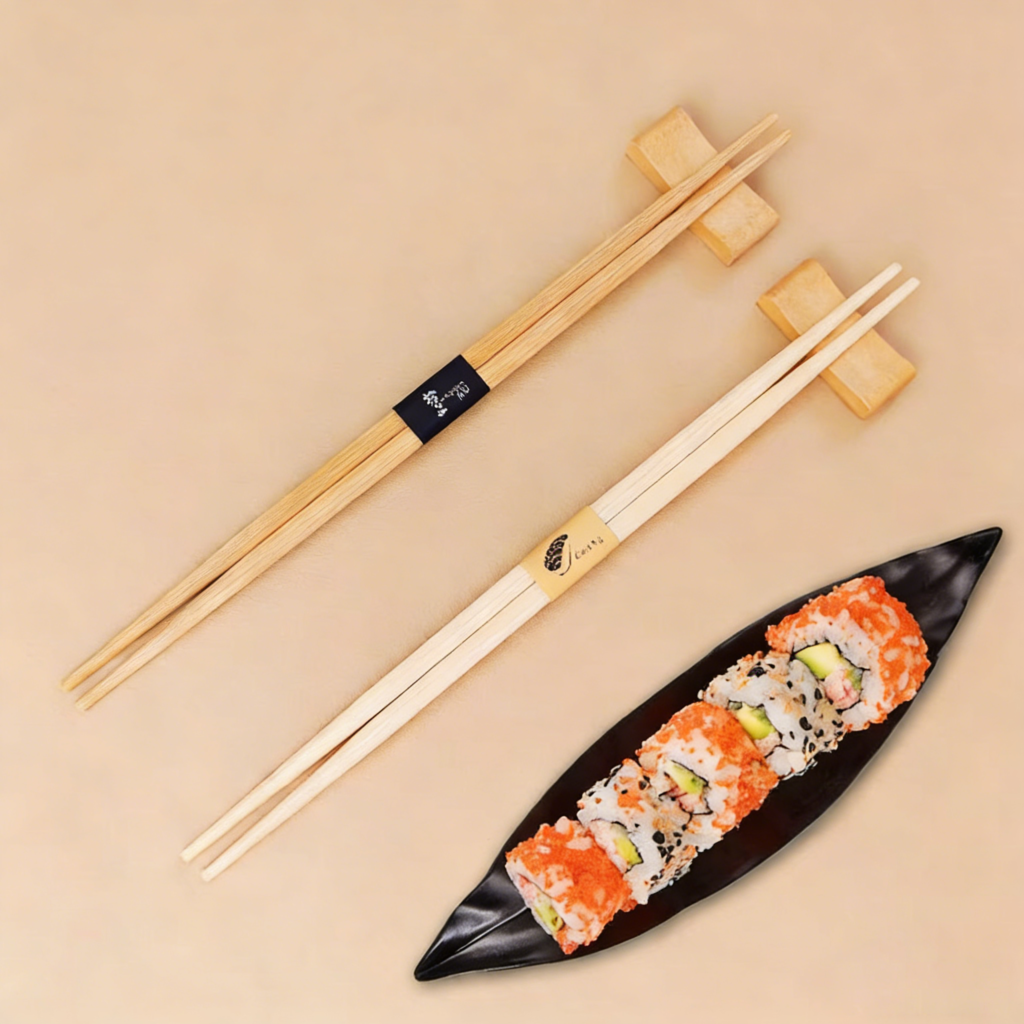
In our bamboo chopstick manufacturing and export process, moisture content control is one of the most critical quality standards we strictly follow.
Based on 25 years of production experience and international shipment feedback from clients, we found that maintaining bamboo chopsticks at below 10% moisture content offer the most stable and reliable performance in the export markets.
The 10% moisture content (MC) is not a random number, it is the result of repeated testing across different climates, shipping conditions, and storage environments.
What Moisture Content Means in Our Production
- Moisture content is the percentage of internal water contained in bamboo after processing.
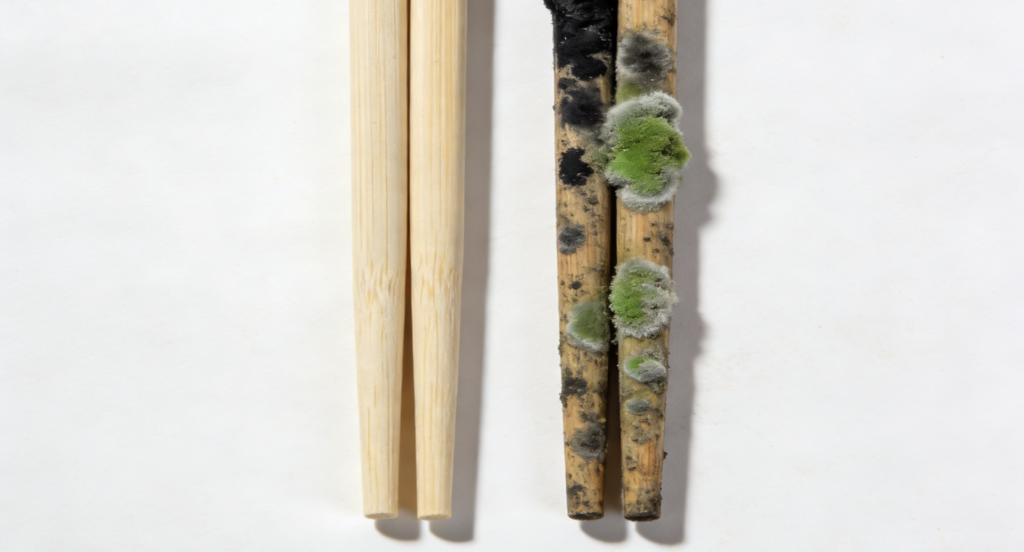
- Because bamboo is a natural and hygroscopic material,poor moisture control can easily lead to mold, odor, deformation, or surface defects during storage and transportation.
- In our factory, bamboo chopsticks are considered export-ready only after moisture levels are verified within our strict quality range.
Why 10% Moisture Content is the gold standard
To make it clear and more well understand,we will explain from physics and factory view below.
Physics Perspective
Equilibrium Moisture Content (EMC)
As the bamboo is a hygroscopic material, it means it will constantly exchange moisture with the outside environment.Numerous scientific studies have shown that most mold (such as Aspergillus and Penicillium) become more active when the relative humidity (RH) of the surrounding air exceeds 75%.
When bamboo chopsticks are packed with a moisture content higher than 12-13%, they create a microenvironment inside Individual wrapped pack or carton that quickly reaches this dangerous 75% RH. By drying our products to below 10%,We ensure that the bamboo remains in a stable state, preventing any biological growth.
The “Container Rain” Phenomenon
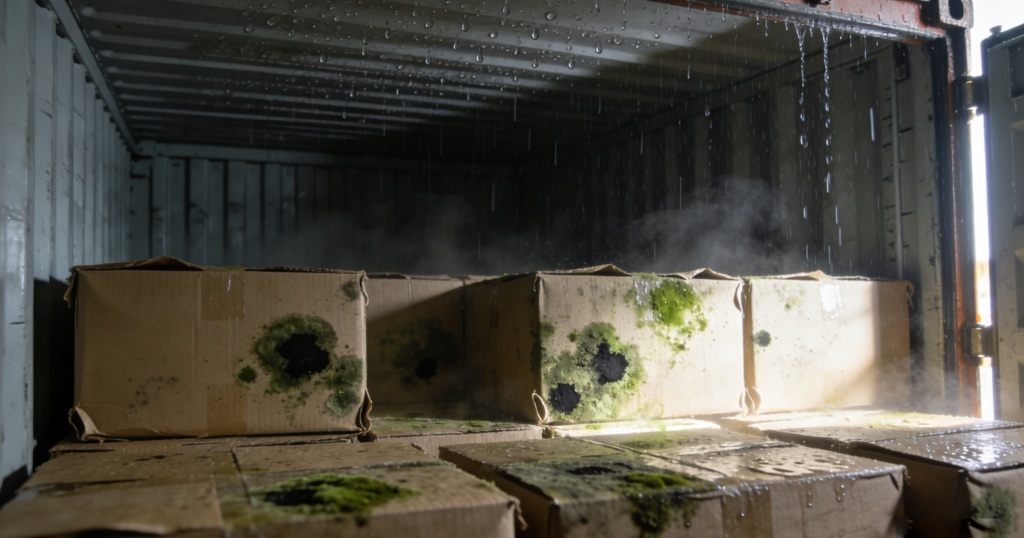
Container Rain is the most significant risk during a 30-to-45-day ocean transit in international trade.Here we will show you what happened.
Evaporation Stage:During the day, as the container was parked on a vessel under the sun, temperatures inside container can soar to 50°C (122°F) or higher. This heat leads to the residual moisture in the bamboo chopsticks to evaporate into the air trapped inside the container.
Saturation Stage:Warm air can hold much more water vapor than cold air.As the air temperature rises, it absorbs a large amount of moisture from the chopsticks, causing them to become very damp.
Condensation Stage: At night, as the temperature drops rapidly (especially when crossing different climate zones), the air reaches its “Dew Point.” The warm, humid air can no longer hold the water vapor, which then condenses into liquid water on the coldest surfaces—typically the steel ceiling and walls of the container.
The Damage Stage:This accumulated water drips directly from the ceiling “like rain” onto the carton. Even though the chopsticks were individually wrapped, the continuous high humidity and water exposure would cause widespread mold growth on the chopsticks, ruining most chopsticks of 40-foot container.
Factory’s Perspective
According to our production and export experience, we have found that:
- Moisture content levels above 12% heavily increase mold risk
- Excess moisture often leads to surface spots or odor after long transit periods
- By controlling bamboo chopsticks at under 10% moisture content, we effectively reduce the conditions that allow mold to develop, even during extended shipping cycles.
Our factory strictly controls the moisture content of our products to below 10%, ensuring that the amount of water vapor released when the temperature rises is insufficient to reach the dew point inside the container. This creates a “dry buffer layer,” allowing the air humidity inside the container to remain below the saturation limit, even when the ship crosses the equator or sails into cold northern waters.
Our Internal Quality Control Protocols.
Inspect Standard
To make the moisture content more precise,We align our production with the following benchmarks:
- ASTM D4442-20: The premier international protocol for direct moisture content measurement in wood and bamboo materials.
- ISO 2859-1 (AQL): The international standard for sampling procedures, ensuring batch-level quality rather than just individual piece quality.
Inspect Method
Although standards define the goal,we have our own SOPs(standard Operating Procedures) to make sure we meet it consistently.
Below is our main procedures:
- Half Raw Material inspect:Each batch of raw materials is tested for moisture content, and any batch with a moisture content exceeding 10% will be rejected.
- Drying oven control:After half raw material passed our first inspect,we will use computer-controlled drying oven where temperature and airflow are adjusted based on the initial density of the bamboo moisture. This ensures the moisture is pulled from the core of the stick, not just the surface.This process can double confirm the moisture content can be under 10%
- In-Process:Our quality controller will use pin-type digital meters the moisture content before final product production .
- Pre-Shipment:Before booking a container, a random sample from the final batch will be measured for moisture content to make sure moisture is safely under 10%.
- Vapor Barrier Bag:We pack bamboo chopstick with opp bag and then into carton.
Factory’s Guide:3 Tips to Protect Your Cargo
If you are sourcing bamboo chopsticks in bulk, we recommend the following professional tips:
- Mandate MC(moisture content) Limits in Contracts: Do not simply ask for “dry” goods. Specify: “Moisture content must be tested and verified below 10% at the time of loading.”
- Verify Packaging: Make sure your supplier uses Vapor Barrier Liners or Plastic Inner Bags and request high-quality Calcium Chloride Desiccants (which can absorb up to 300% of their weight in moisture) inside the each opp bag before sign the contract.
- Bulk Order Inspection: You need ask factory or third party to test the moisture content before loading into container to make sure the moisture content under 10%.
If you would like to know more details about how to inspect the bamboo chopsticks as a buyer,please read our another article How to Inspect the Quality of Disposable Chopsticks
Reference Standards
| Category | Standard No. | Purpose |
| Moisture Testing | ASTM D4442-20 | Accurate measurement of MC% |
| Sampling Protocol | ISO 2859-1 | Representative batch QC |
| Food Safety | LFGB / FDA / EU 1935 | Chemical & heavy metal safety |
In disposable bamboo and wooden chopstick international trade,10% is more than a number—it is a guarantee of quality and reputation. By understanding the science of thermodynamics and moisture equilibrium, we ensure that every pair of chopsticks arrives at your restaurant table as clean and safe as the day it was manufactured.
Dalian Weimei Houseware is a professional factory with 25 years’ export experiences, please contact our QC to discuss your details requirement.
