
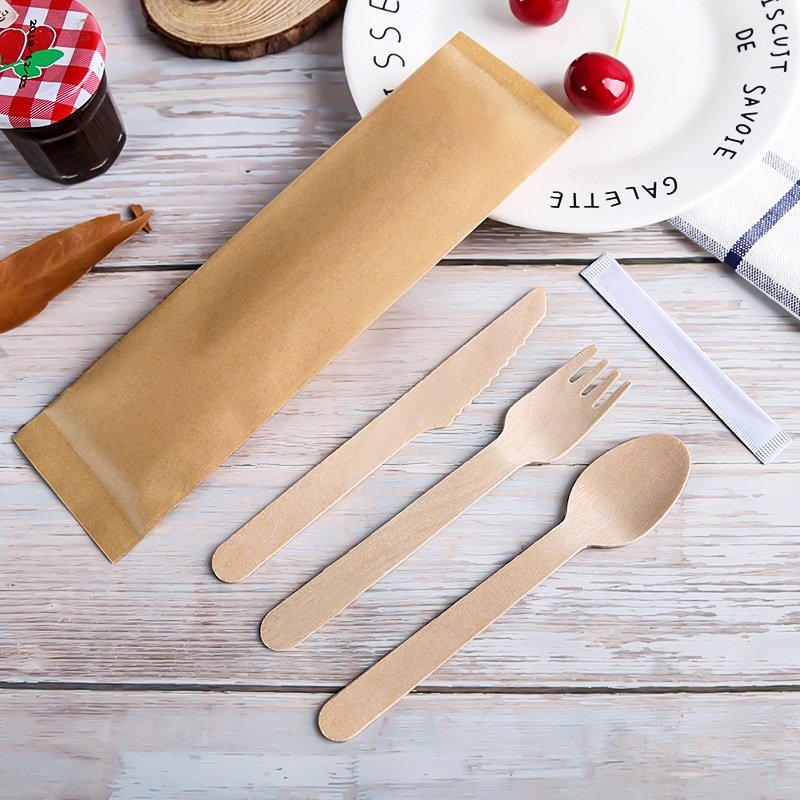
Choosing the right wooden cutlery manufacturer is a critical decision for importers, distributors, restaurants, and food service brands. A reliable supplier ensures consistent quality, food safety compliance, stable lead times, and long-term cooperation — while the wrong choice can lead to delays, quality issues, or even regulatory risks.
In this comprehensive guide, we explain the key factors you should consider when selecting a trustworthy wooden cutlery manufacturer, as well as additional tips for long-term partnership success.
1. Verify Food Safety and Compliance Standards
Food safety is always the top priority when sourcing disposable wooden cutlery. A reliable manufacturer should provide clear proof of compliance with international regulations, which protects your customers and prevents import problems.
Key Certifications and Standards
- FDA (U.S.): Ensures materials are safe for food contact, free of harmful chemicals.
- LFGB (EU): German standard verifying food safety of materials and coatings.
- EU Plastics Regulation / EN Standards: If products contain any additives or coatings.
- Food-grade raw materials: The wood must be untreated, chemical-free, and free from contaminants.
Tip: Always ask the supplier for test reports or certificates. If they hesitate or provide unclear documentation, it is a red flag.
Common Food Safety Mistakes
- Using treated or varnished wood, which may leach chemicals.
- Incorrect drying or storage, leading to mold or bacterial growth.
- Packaging with non-food-grade materials, contaminating the cutlery.
Reliable manufacturers implement strict food safety checks at every stage to prevent these risks.
2. Evaluate Raw Materials and Sustainability
The raw material quality directly affects product durability, appearance, and eco-friendliness — which is increasingly important for global buyers.
Wood Types
- Birch: Smooth surface, durable, commonly used for spoons and forks.
- Beech: Hard and strong, ideal for knives and heavy-duty cutlery.
- Poplar: Lightweight, cost-effective, commonly used for large-volume orders.
- Bamboo: Renewable, eco-friendly, naturally antibacterial.
Sustainability Certifications
- FSC (Forest Stewardship Council): Verifies responsible forestry practices.
- PEFC (Programme for the Endorsement of Forest Certification): Similar sustainability standard.
Buyers increasingly prefer certified, eco-friendly cutlery. Working with a supplier who meets these standards improves your brand image and compliance.
3. Assess Manufacturing Capacity and Experience
Production capability affects lead time, quality, and the ability to meet growing demand.
Key Points to Evaluate
- Years of manufacturing experience in wooden cutlery production.
- Number of production lines and total monthly output.
- Previous export experience and main markets.
- Ability to scale production during peak seasons.
Manufacturers with stable capacity and export experience can handle bulk orders without delays.
Questions to Ask
- How many pieces can you produce daily?
- How do you handle rush orders?
- Have you exported to Europe or the U.S.?
- What quality control processes are in place?
4. Understand the Quality Control Process
Quality control (QC) ensures that every batch meets the required standards. A transparent QC system is a hallmark of a reliable manufacturer.
Typical QC Steps
- Raw Material Inspection: Checking moisture, grain, and defects.
- In-process Checks: Monitoring cutting, sanding, and shaping.
- Final Inspection: Verifying smoothness, shape consistency, and size.
- Random Sampling: Ensuring that each shipment meets specifications.
Proper QC reduces defects, prevents customer complaints, and supports your reputation.
5. OEM and Customization Capabilities
OEM and customization are essential if you want to brand your products.
Typical Customization Options
- Logo printing or laser engraving.
- Custom sizes and shapes.
- Private packaging designs (box, bag, or eco-friendly wrap).
- Custom product bundles (fork, knife, spoon sets).
Tip: Verify the manufacturer’s experience with OEM projects. Ask for examples or client references.
6. Review MOQ, Pricing, and Lead Time
Before committing, clarify the commercial terms to avoid misunderstandings.
Key Considerations
- Minimum Order Quantity (MOQ): Some manufacturers accept small orders, others require bulk.
- Pricing Structure: Volume-based pricing and sample costs.
- Production Lead Time: Standard and rush options.
- Sample Preparation Time: Often 1–2 weeks, varies by customization.
Reliable suppliers provide transparent terms and realistic timelines.
7. Communication and Responsiveness
Communication is often overlooked but crucial for long-term cooperation.
Indicators of a Good Supplier
- Clear and professional responses.
- Understanding of international trade terms.
- Proactive updates during production.
- Detailed quotations and documentation.
Good communication minimizes misunderstandings and ensures smooth order fulfillment.
8. Request Samples Before Bulk Orders
Samples allow you to verify quality firsthand.
Sample Evaluation Steps
- Check the smoothness, edges, and finish.
- Test strength and usability.
- Evaluate packaging quality.
- Compare with specifications and drawings.
Reliable manufacturers welcome sample requests and provide prompt delivery.
9. Industry Trends for Wooden Cutlery
Understanding market trends helps you choose a forward-looking supplier.
Key Trends
- Growth in eco-friendly, disposable tableware due to bans on plastic cutlery.
- Increased demand in restaurants, takeaways, airlines, and events.
- Rising preference for bamboo cutlery for sustainability.
- Stricter regulations in Europe and the U.S. regarding food safety and biodegradability.
Selecting a manufacturer aligned with these trends ensures future-ready products.
10. Common Buyer Mistakes
New buyers often make mistakes that affect quality, cost, and delivery.
Examples
- Choosing a supplier based solely on price.
- Ignoring certifications and compliance.
- Not verifying production capacity or lead time.
- Failing to request samples before bulk orders.
Avoiding these pitfalls increases your chance of successful cooperation.
11. Supplier Comparison Checklist
Create a checklist to evaluate potential manufacturers objectively:
| Criteria | Score 1–5 | Notes |
|---|---|---|
| Food Safety Compliance | ||
| Raw Material Quality | ||
| Production Capacity | ||
| QC Processes | ||
| OEM/Customization | ||
| Pricing & Lead Time | ||
| Communication |
This systematic approach helps prioritize suppliers and make informed decisions.
12. Tips for Long-Term Cooperation
Establishing a reliable long-term relationship saves time, reduces costs, and ensures quality.
Best Practices
- Sign clear contracts including delivery and quality terms.
- Schedule regular check-ins and production updates.
- Encourage continuous improvement and new product development.
- Build trust with transparent communication.
13. Conclusion: Choose a Long-Term Partner
Selecting a wooden cutlery manufacturer is not just about price — it is about reliability, safety, quality, and long-term partnership.
By evaluating compliance, raw materials, production capacity, quality control, OEM capabilities, pricing, and communication, you can minimize risks and secure a stable supply chain.
Looking for a Reliable Wooden Cutlery Manufacturer?
Weimei Houseware specializes in disposable wooden and bamboo cutlery for global markets. With strict QC, food-grade materials, OEM support, and fast response times, we help our partners grow their business with confidence.
👉 Contact us today to discuss your project and get a free quote.
